 Judikit
Legal help, just a tap away.
Judikit connects you with Bar Council-verified advocates across India for property disputes, criminal defence, corporate law, family matters, and more.
What best describes you?
One platform. A path made for you.
Citizen
A clearer way to get legal help.
- Find your lawyer
- Raise a case request
- Follow your case
Lawyer
More room for your practice to grow.
- Connect with clients
- Manage your matters
- Organise your schedule
Student
Build the foundations of your future.
- Learn and research
- Explore internships
- Join the community

Need a lawyer in India?
Property disputes, criminal cases, corporate law, family matters. Judikit connects you with the right verified advocate, fast.
Legal Services Built for
How Indians Actually Live
From property disputes and criminal defence to corporate law and alternative dispute resolution. Find the legal help you need, where you need it.
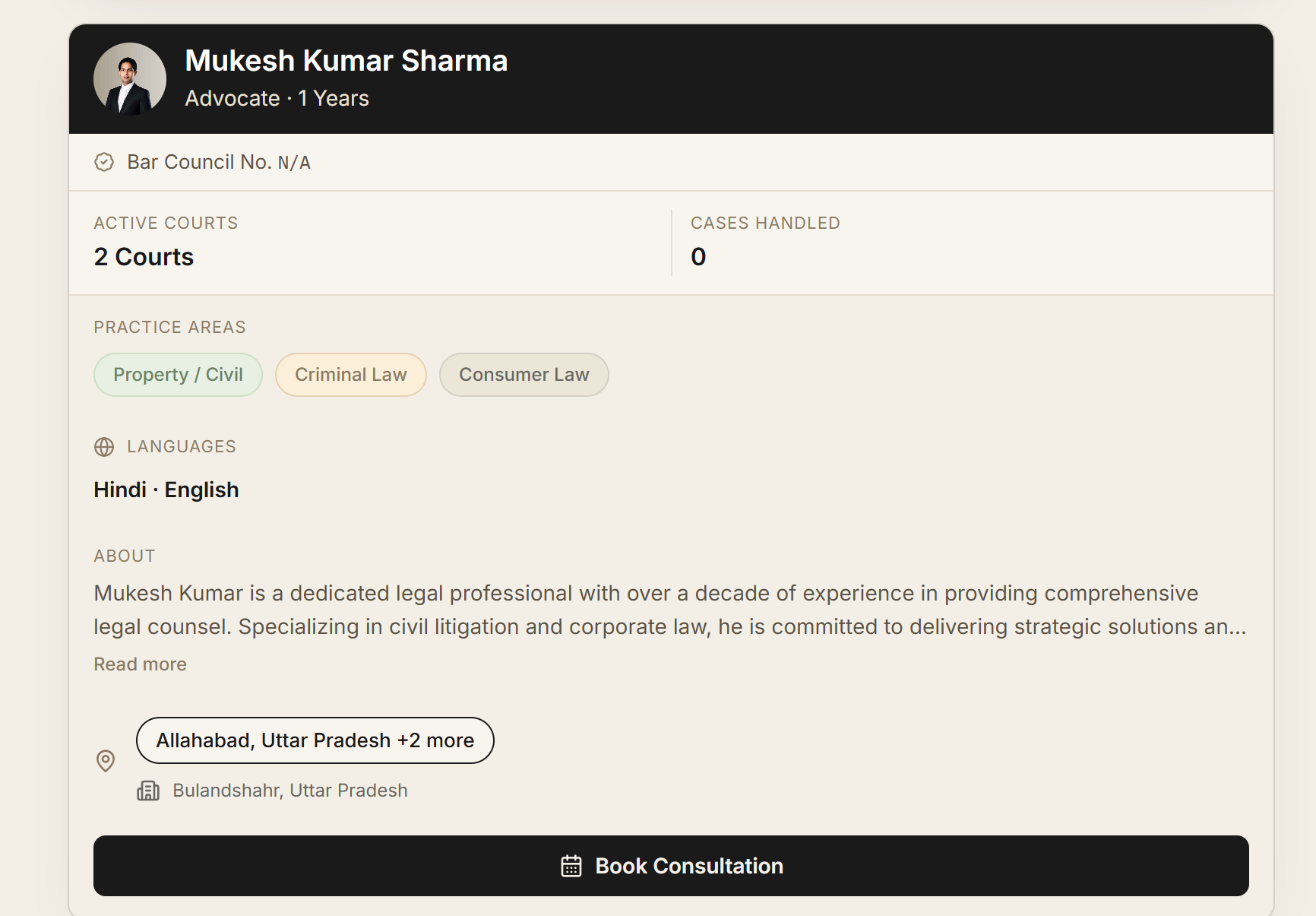
Legal Advice & Consultation
Find and connect with verified advocates across India in minutes. Whether you need initial legal advice for a property dispute, guidance on a criminal matter, or an experienced advocate for ongoing representation, search by city, court, and practice area to find the right expert.
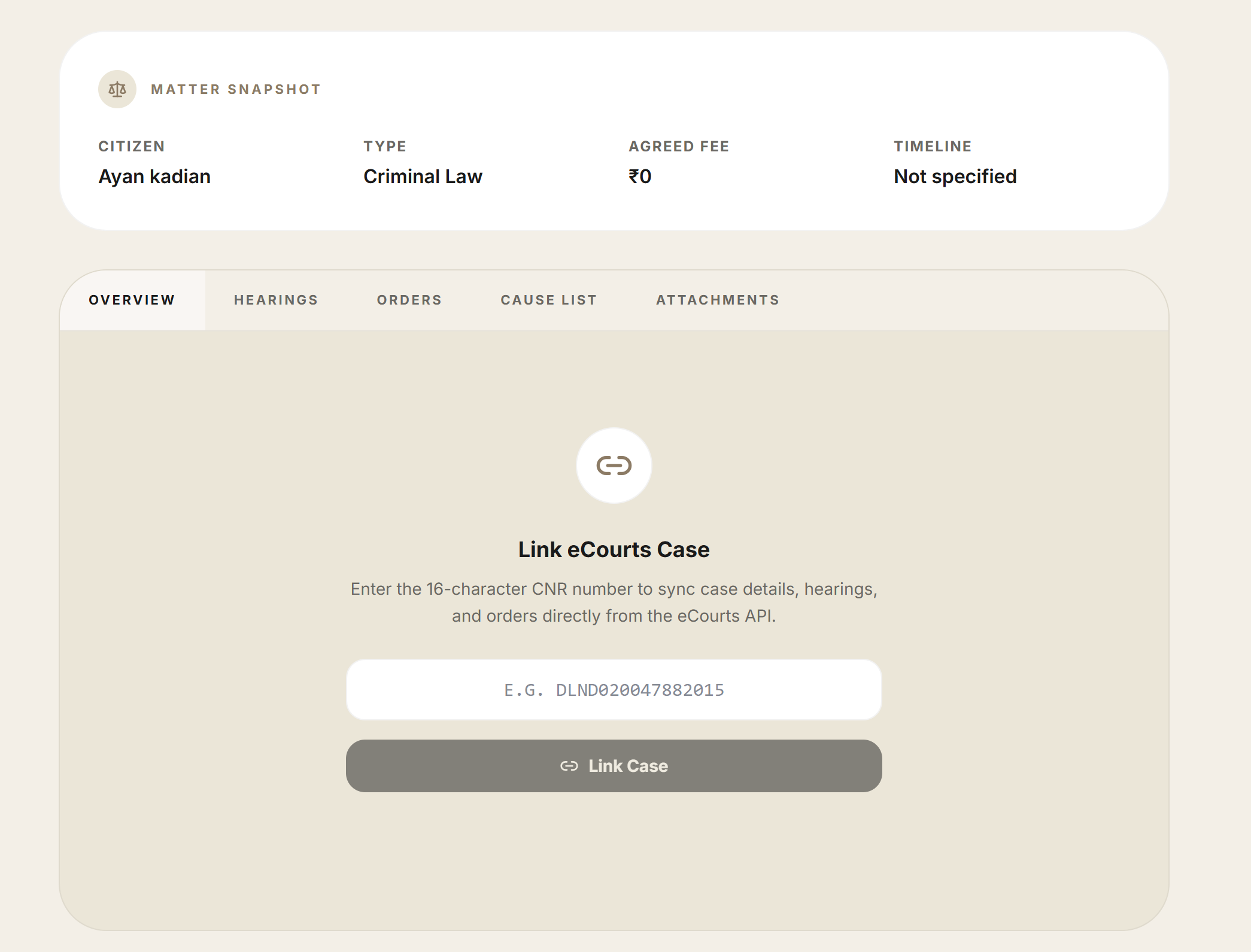
Case Tracking & Management
Never miss a High Court or District Court deadline, never lose a document, and never leave a client wondering what's happening with their case. Judikit's practice dashboard keeps your calendar, case files, and client communication in one place, so your reputation stays solid and your clients stay informed.
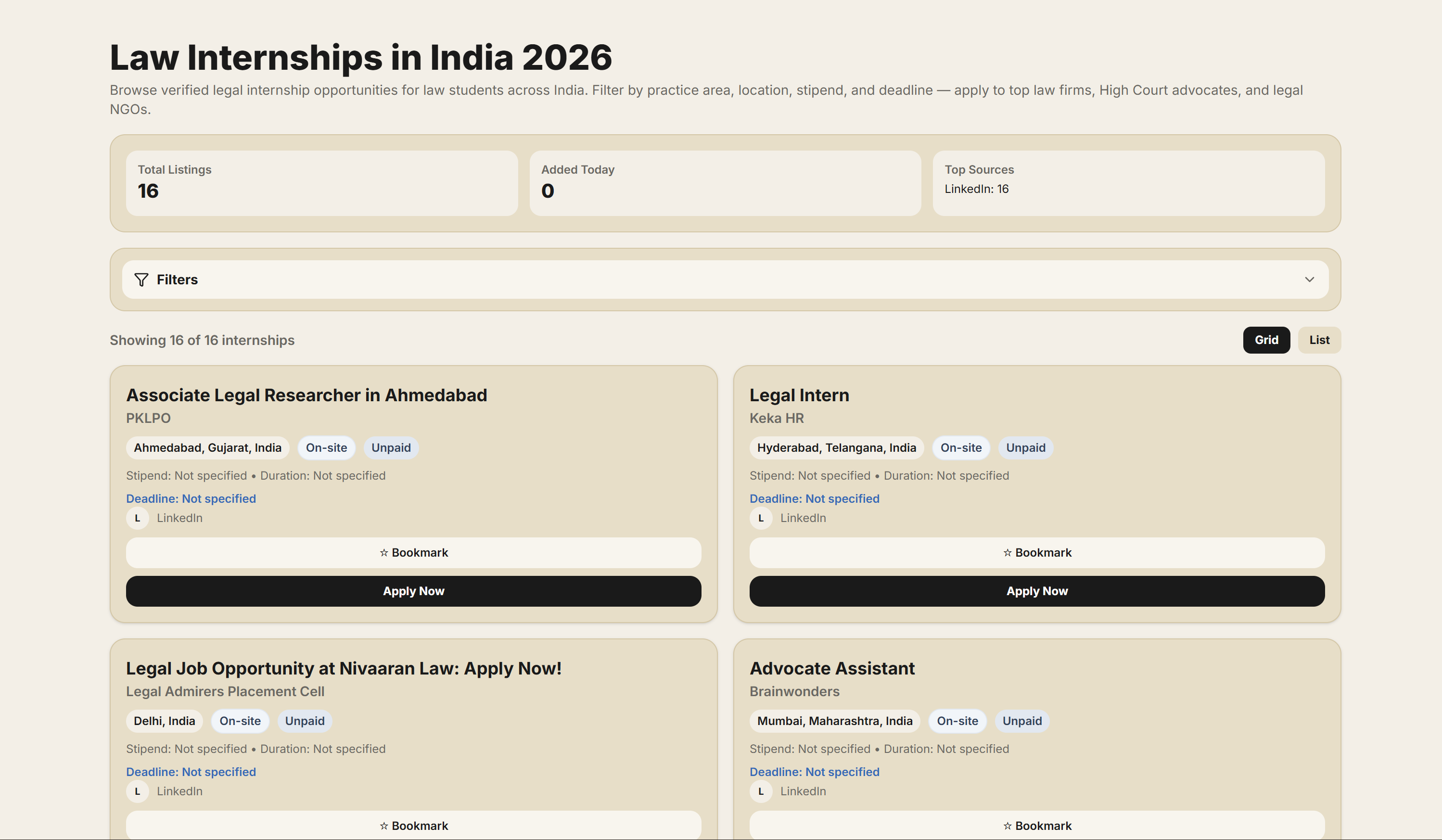
Law Student Mentorship & Internships
India's dedicated career platform for law students. Access curated CLAT and AIBE study resources, apply for verified internships with Supreme Court and High Court advocates, and learn from experienced legal professionals through our mentorship forums.
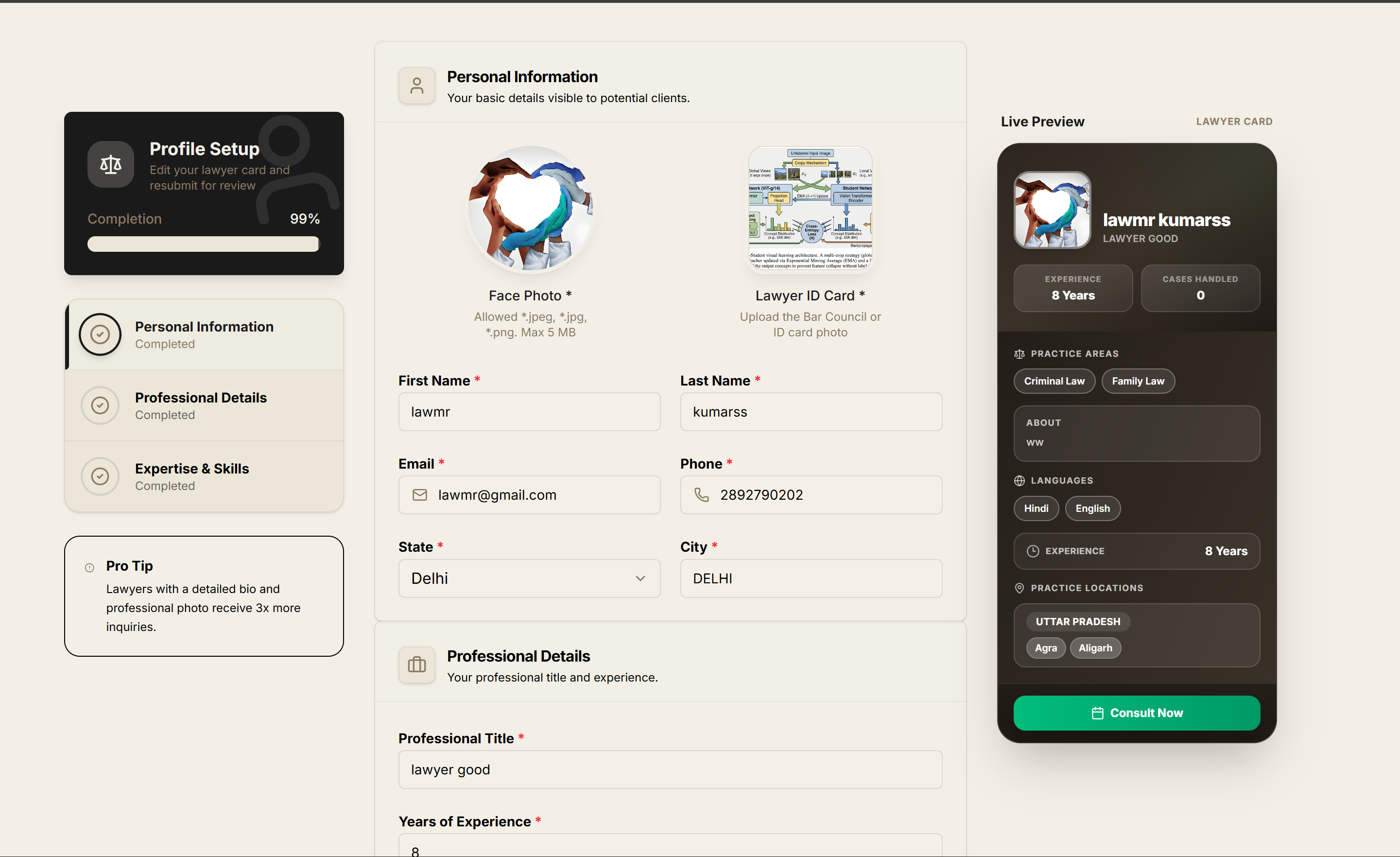
Lawyer Profile & Digital Presence
Build a professional advocate profile that helps clients across India discover your legal services. Showcase your Bar Council registration, specialisations, court appearances, and client reviews. Receive enquiries, manage bookings, and grow your practice digitally.
Built for trust,
not just listings
Verified Lawyers
Every advocate is checked before they go live.
See the flowGetting Matched
Cases reach the right lawyers, automatically.
See the flowPrivate & Secure
Your case details stay between you and your lawyer.
See the flowOrganized Case Management
Every case, every message — one place.
See the flowFAQs
Frequently
Asked Questions
Everything you need to know about finding and consulting with verified lawyers on Judikit.
How do I find a verified lawyer in India on Judikit?
Is Judikit free to use for finding a lawyer?
How does Judikit verify its lawyers?
What kind of legal cases can I get help with on Judikit?
How does the case registration process work on Judikit?
What are coins and how do they work on Judikit?
Is my case information safe on Judikit?
Can law students use Judikit?
What tools does Judikit offer besides finding a lawyer?
Can lawyers list their practice on Judikit?
Our Blog
Indian law, plain language. What changed in 2026 and what it means for you. Property rights, criminal procedure, corporate compliance, consumer protection. No legalese, no fluff. Just things worth knowing whether you have an active case or not.